
What Endurance Coaching Really Is
Endurance coaching is a relationship.
At its best, it's built around you: your physiology, your schedule, your stress, your real life. No two athletes need the same training, because no two bodies, seasons, or lives match. Research backs this up: when training load adjusts to your actual recovery and readiness instead of a fixed schedule, you adapt faster and further.
That's the difference between coaching and a plan downloaded off the internet. A good coach doesn't just hand you Monday, Wednesday, Saturday. A good coach watches the whole picture, how you're recovering, how your body responds, how life is hitting you, and adjusts before small cracks become big breaks.
And here's the part we don't say enough: you don't do this alone. Nobody transforms in isolation. We're wired for relatedness, built to change in connection, not solitude. That's not a nice-to-have. It's the mechanism.
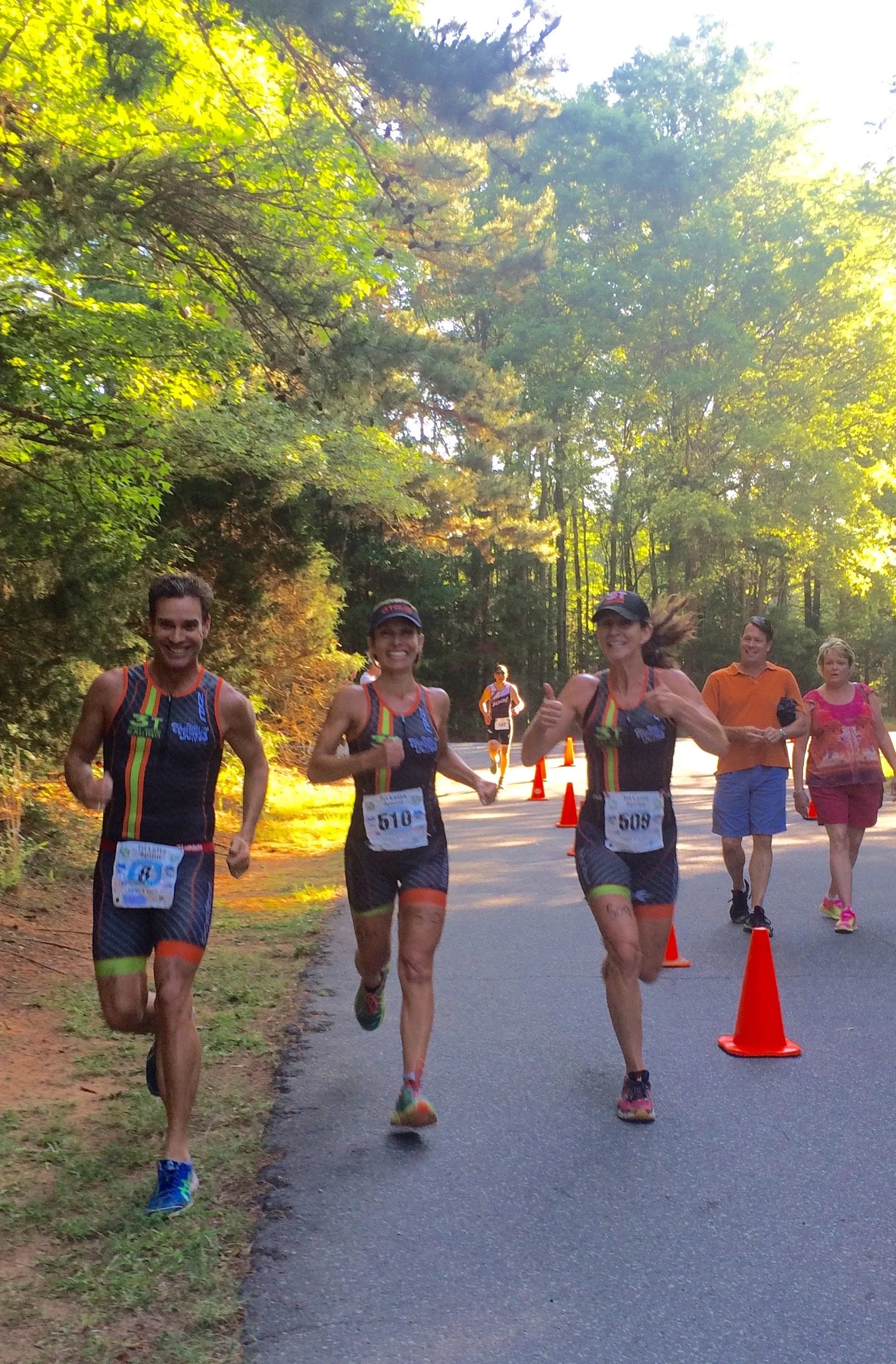
Training that adapts to you
Good coaching is evidence-based, not guesswork. Heart rate, pace, power, perceived exertion, recovery trends, all of it feeds real decisions about your workload. Push enough to build fitness. Not so much you break. That balance, load against recovery, is the whole job.
Progression is never a straight line. Some weeks you're strong. Some weeks you're flat. Some weeks life just gets loud. Training stress and life stress aren't separate ledgers, they're the same account. A strong coach treats them that way and adjusts the plan so you keep moving even when the perfect week never shows up.
Recovery Is Part Of The Plan
Coaching takes care of your whole body, not just your training log.
Sleep. Nutrition. Hydration. Strength. Mobility. Stress. None of it is separate from performance, it is performance. Skip recovery and you get run down, plateaued, or hurt. Good coaching keeps easy days easy, hard days purposeful, and recovery baked into the rhythm of the week, not bolted on when you're already exhausted.
A sharp coach also knows the difference between normal training soreness and the first whisper of injury. Catching that early saves you months later.
Through The Difficult Middle
Here's where coaching earns its keep: the difficult middle.
The excitement of signing up is gone. The finish line still feels far off. Motivation has left the building and discipline has to carry the load, except it doesn't have to carry it alone. This is exactly where athletes start doubting themselves, skipping sessions, or forcing too much too fast, usually because they're white-knuckling it solo.
A good coach keeps you steady here. Focus on the process. Keep the effort honest. Keep training sustainable, not emotional. In other words: they keep you company on the miles nobody's cheering for yet.
That middle stretch is bigger than performance. It's identity work. It's where you become the athlete who stays with it, trusts the process, and keeps showing up, because someone is showing up with you. As Coach Kristi Ray likes to say: "If we do the training right, the event is like a piece of cake." The training in the middle, done in relationship, is what makes that true.
Fewer Injuries, Smarter Training
Good coaching also keeps you off the injury list.
Smart load management. Strength work. Movement quality. Honest feedback about what your body is actually telling you. No coach can promise you'll never get hurt, but a good one makes it far less likely, adjusting volume and intensity before your body gets pushed past its limit.
This is exactly why personalized coaching matters. A plan that ignores your mechanics, your history, your current stress load might look good on paper and still set you up to fail. Good coaching catches the small ache before it becomes the big setback.
When Injury Happens
Even the best coaching can't injury-proof you completely.
When it happens, coaching becomes guidance, patience, and a smart way back. Not panic. Not all-or-nothing. A clear roadmap: what to stop, what to keep, how to keep moving safely, how to rebuild step by step. The most dangerous moment is often when you start feeling normal again, because normal, early on, can lie to you about how much you should actually be doing.
That roadmap might mean lower load, different training stress, working around pain, and a gradual return to running, cycling, swimming, or lifting as your body allows. It also means knowing exactly when to hand you off to a medical professional and when to simply adjust the week.
This is the part people miss: athletes don't just need someone to get them to the start line. They need someone in their corner to get them back up when the setback comes, because it will.
AI Helps, But Human Coaching Matters
AI and wearables are useful. They track patterns, organize data, flag what's changing in real time. What they can't do is sit with you when you're tired, discouraged, hurt, or trying to squeeze training into an already-full life.
The strongest model is a hybrid: let the data do the data's job, and keep a real human in the loop for judgment, accountability, and care. Because coaching, at its core, is a relationship.
We Don't Transform Alone
Here's the truth underneath all of it: endurance coaching isn't only about fitness. It's about belonging.
Train alone long enough and isolation creeps in, even when the training itself is going fine. Train inside a coaching relationship and a community, and the whole thing becomes more sustainable, more encouraging, more enjoyable. Humans weren't built to grind in solitude. We change in connection. We hold the line better when someone else is holding it with us.
That's the real reason the best coaching does more than hand you workouts. It builds you a community to become somebody inside of, not just a program to survive alone.
"The miracle isn't that I finished. The miracle is that I had the courage to start." – John Bingham
Loving you,
Johnna Smith
Founder & Head Coach, ThriveWise Coaching — thrivewisecoach.com
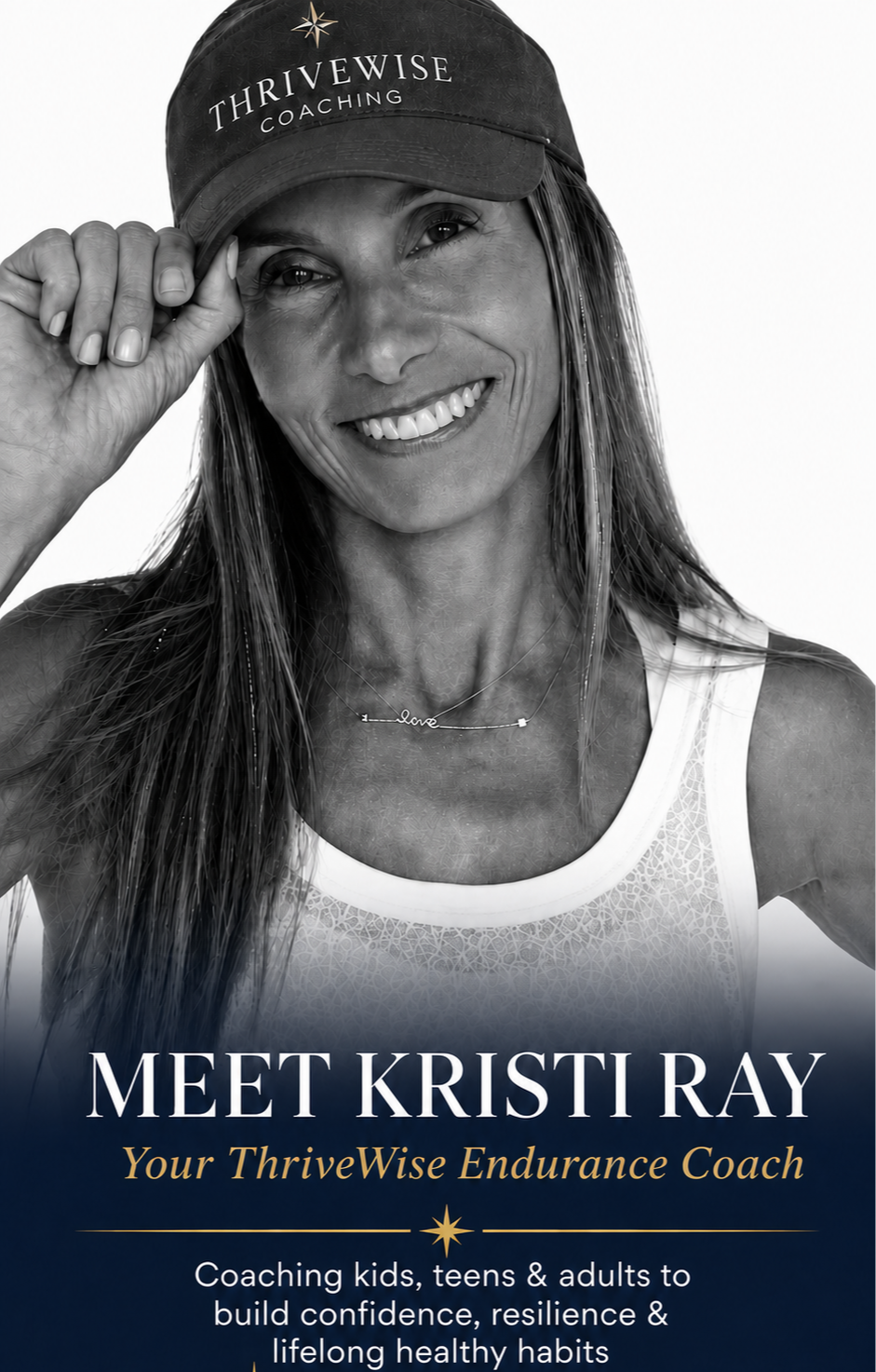
ThriveWise blends eastern and western modalities to build a life you love.
If you're craving more structure, resilience, and follow-through this season, meet Kristi Ray, our Endurance Coach at ThriveWise. She holds an MS in Nutrition, is a Registered Yoga Teacher (RYT 200), an NSAM-certified Personal Trainer, and is USA Triathlon certified. She's also a mom of five, a finisher of countless marathons, 6 Ironman triathlons, and a former Girls on the Run coach.
Kristi trains the body and the mind together, so the fitness you build is backed by recovery, nutrition, and the steadiness to get through the middle, not just to the start line. Calm, disciplined, encouraging: she turns a training plan into a community you show up for.
She's a natural ally for anyone chasing a race or performance goal this season.
Train smarter.
Recover better.
Build the kind of steadiness, in company, not isolation, that makes the event itself feel, in her words, like a piece of cake. Ready to make this season count? Set up a discovery call to connect with Kristi and ThriveWise.