
A ThriveWise Guide Late Winter

A ThriveWise Guide:
The Late Winter Fatigue-Anxiety Loop, and Three Luminous Ways Back to Yourself
There's a particular kind of exhaustion that settles in around late February. Not the holiday burnout of December. Not the resolute push of January. This is something deeper, a heaviness in the bones, a fog behind the eyes, an unsettling restlessness that sits right alongside the fatigue, as if your body can't decide whether it wants to collapse or crawl out of its own skin.
If this feels familiar, nothing is wrong with you. What you’re experiencing has a name in one of the world’s oldest medical traditions, and a beautiful explanation for why it arrives in this slim corridor between winter and spring, and why anxiety so often slips in beside it.
What's Happening Inside You Right Now
Ayurveda, the 5,000-year-old science of life, divides the year into seasons governed by specific energies. Late winter through early spring belongs to Kapha: the heavy, cool, dense energy of earth and water. Think of it as mud season, not just outside, but inside your body.
All winter long, Kapha has been gently accumulating. The heavier foods, the shorter days, the slower pace, the cocooning. This isn't a mistake; winter is supposed to be a season of building and storing. But by late February (and in some areas, late March), that stored energy has reached a tipping point. As temperatures begin to shift, even subtly, the accumulated Kapha starts to "melt" and flood your system. If your body can't clear it efficiently, you feel it everywhere: sluggish digestion, water retention, brain fog, low motivation, and a bone-deep weariness that no amount of sleep seems to touch. But here's the part most people miss, and the part that makes this season uniquely destabilizing for women.
The Bucket With a Hole in It
Dr. Claudia Welch, one of the most respected voices bridging Ayurveda, Chinese Medicine, and Western endocrinology, offers an image that changes the way you think about fatigue and anxiety forever. She calls it The Bucket Syndrome.
Picture your vitality as water in a bucket. The water represents your nourishing hormones, progesterone, estrogen, and DHEA, the ones that keep you calm, grounded, rested, and resilient. These are your reserves: cooling, replenishing, deeply feminine in their intelligence.
Now, picture a hole in the bottom of that bucket. That hole is chronic stress, and every drop of stress hormone (cortisol, adrenaline) your body produces widens it. Here's the devastating part: when your body is under sustained pressure, a packed schedule, financial worry, caregiving, the rhythm of doing too much while receiving too little, it makes a ruthless survival decision. It converts your progesterone into cortisol. One-way ticket. The very hormone that keeps you calm, helps you sleep, and stabilizes your mood gets sacrificed to keep you running.
They are not separate problems; in fact they are the same depletion:

Fatigue and anxiety show up together
The fatigue comes from running on empty. Your nourishing reserves are draining faster than you can replenish them.
The anxiety comes from a nervous system that has lost its buffer. Without adequate progesterone and with cortisol running the show, your brain stays locked in a low-grade state of alarm.
The timing is not a coincidence. Late winter asks your body to mobilize and clear months of accumulated heaviness, but if the bucket is already half-empty from chronic stress, you simply don't have the reserves to do it gracefully.
As Dr. Welch puts it, adding more back into the bucket, whether through supplements, hormone therapy, or sheer willpower, without addressing the hole is like pouring water into a vessel that can't hold it.
Three Signs Your Bucket Is Leaking
Before we talk about repair, let's name what this feels like in your daily life, because these symptoms are so common among high-achieving women that they've been normalized into invisibility.
1. You're Tired and Wired
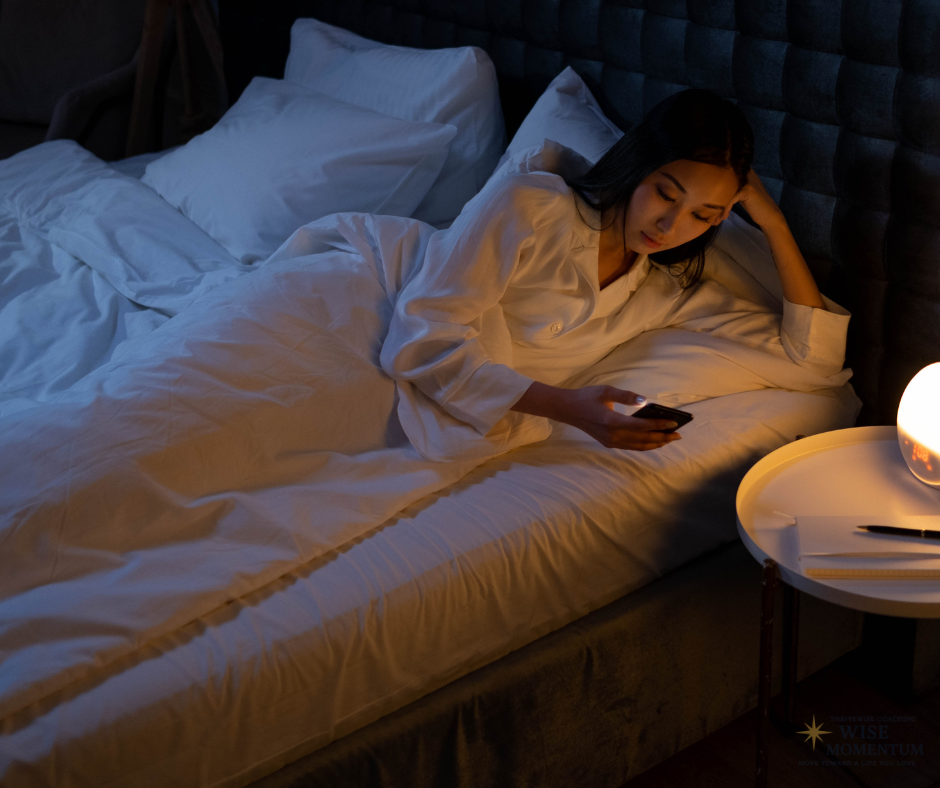
This is the signature paradox of late winter: you fall into bed exhausted, but your mind will not switch off. You wake around 3 a.m. with a racing heart or a to‑do list scrolling behind your eyes, then spend the day swinging between wanting to lie down and feeling an anxious, unproductive urgency. In Ayurvedic language, Kapha is high (creating heaviness and lethargy) while Vata is simultaneously disturbed (creating mental agitation and restlessness), and the channels that carry prana (your life‑force) are congested with ama, the residue of undigested food, emotions, and life experience. Modern science would describe the same pattern as HPA axis dysregulation and low vagal tone: your stress system is overfiring, your cortisol rhythm is flipped, and your nervous system is stuck in a half‑on state: too revved up to truly rest, too depleted to feel fully awake.
2. You’ve Lost Your Glow and Your Appetite for Life
This isn’t just about your skin losing its brightness (though late‑winter puffiness and a grayish cast are textbook signs); it’s about the silent dimming of the spark that makes you want to create, connect, and step out into the world. Ayurveda calls this the fading of tejas (your inner radiance) when ama clogs the channels, and stress hormones drown out your more nourishing chemistry. Modern science sees the same pattern as seasonal serotonin depletion: in late winter, brain scans show serotonin being cleared from key mood and motivation centers faster than it can be used, especially in February and March, leaving you flat, unmotivated, and moving through mental fog. For women, fluctuating or declining estrogen can magnify this effect, since estrogen normally supports serotonin production and receptor sensitivity, which is why midlife shifts, menstrual cycle changes, or perimenopause can make late‑winter blahs feel like someone turned down the dimmer switch on your whole life
3. Your Digestion, Sleep, and Cycle Are All Slightly Off
This is where the stress chemistry really lands in the body. When your nervous system is running hot for too long, the brain quietly dials down the hormones that aren’t essential for survival. Things like progesterone and estrogen, the very hormones that keep your digestion smooth, your sleep deep, and your cycle predictable. Under the hood, chronic HPA axis activation (your stress system) suppresses the HPG axis (your reproductive system), so cortisol stays high while sex hormones drift low. In real life, it feels like this: meals you’ve always tolerated now leave you bloated and heavy because blood flow is being pulled away from your gut; you’re drowsy in the evening but suddenly wide awake at 3 a.m. because your cortisol and melatonin rhythms are out of sync; your period shifts (more PMS, heavier bleeding, more irritability and anxiety in the luteal phase) because the hormonal “brake” that progesterone and healthy estrogen usually provide just isn’t there. Layer that onto late winter, when the whole system is already more sluggish and sunlight‑deprived, and these “slightly off” signals are your body’s way of saying: the stress circuitry is running the show, and the parts of you devoted to pleasure, rest, and reproduction are hushed and going offline.
Three Remedies That Actually Fill the Bucket
The answer is not another push or another optimization. The answer, at this level of your life, is to signal to your body with repetition that it is exquisitely safe, exquisitely provided for, and free to shift out of survival and back into creation.
A Precision Morning Practice for Your Nervous System
Think of your first minutes of the day as a laboratory for your brain. Five to fifteen minutes of Nadi Shodhana, alternate nostril breathing, is a direct way to reset your HPA axis and up‑regulate vagal tone, the same circuitry modern neuroscience tracks when we talk about resilience and calm. You sit, spine tall, and simply guide the breath in and out through one nostril at a time, allowing the system that manages cortisol and adrenaline to downshift into a smoother, more intelligent rhythm. This will train your stress chemistry to peak when you need it and soften when you don’t. Pair this with a few minutes of stillness, eyes closed, hands resting, and you have a quiet, exquisitely elegant intervention that both Ayurveda and the best neuroendocrine research would recognize as gold standard: cortisol steadies, heart rate variability improves, and your brain stops raiding your hormonal reserves just to get you through the day.

2. The Abhyanga Ritual: Luxury as Medicine
Warm oil on skin is one of those rare practices that feels purely indulgent and is, at the same time, deeply therapeutic. A slow abhyanga — self‑massage with warm sesame or herbal oil before your shower — sends a clear message through touch, temperature, and scent: you are not in danger. From a scientific point of view, you are increasing parasympathetic activity, lowering cortisol, and raising oxytocin, the hormone of bonding and ease. From an Ayurvedic lens, you are nourishing ojas and calming Vata while gently mobilizing sluggish Kapha. You don’t need an hour at a spa; ten intentional minutes in your own bathroom, with warmed oil, soft towels, and a candle you love, is enough to change the way your body reads your life — not as a series of emergencies to endure, but as a well‑held experience it can relax into.

3. Intelligent Nourishment: Food and Light That Work With Your Biology
In late winter, your physiology is already working harder in the dark. Serotonin dips, melatonin stretches, cortisol timing gets slippery. This is the moment to eat and live in a way that supports you. Warm, cooked, gently spiced meals like slow soups, roasted vegetables with good olive oil are easier for your system to digest, which means less blood flow is stolen from your brain and more stability in blood sugar and mood.

You give your day a few clear anchors: regular meals, a dose of morning light, no caffeine past midday, and a light, early dinner so nightfall has room to do its work. Do not take for granted the power of simplicity. You are smoothing out your stress rhythms, steadying the conversation between gut and brain, and creating the quiet, precise conditions in which estrogen and progesterone can actually support you. This is a refined, deeply informed way of living in step with a body that is already carrying you through an extraordinary life.

The ThriveWise Vitality Journey
If you are ready to stop managing your symptoms and start inhabiting your life with profound energy, ease, and pleasure, I created the ThriveWise Vitality Journey for you. This is where we take these rituals off the page and into your actual days, with bespoke guidance, accountability, and support designed for women who live full, generous lives and want their bodies to match their ambitions.
I’d love to invite you into this next chapter. Click here to explore the ThriveWise Vitality Journey, reserve your spot, and begin the joyful work of bringing your radiance back online.